Bolivian farmer turns waste into tractor fuel as diesel costs rise
Etson Machaca’s small plant in Bolivia’s Altiplano produces fuel from waste, reducing his farming costs after the government ended diesel subsidies.
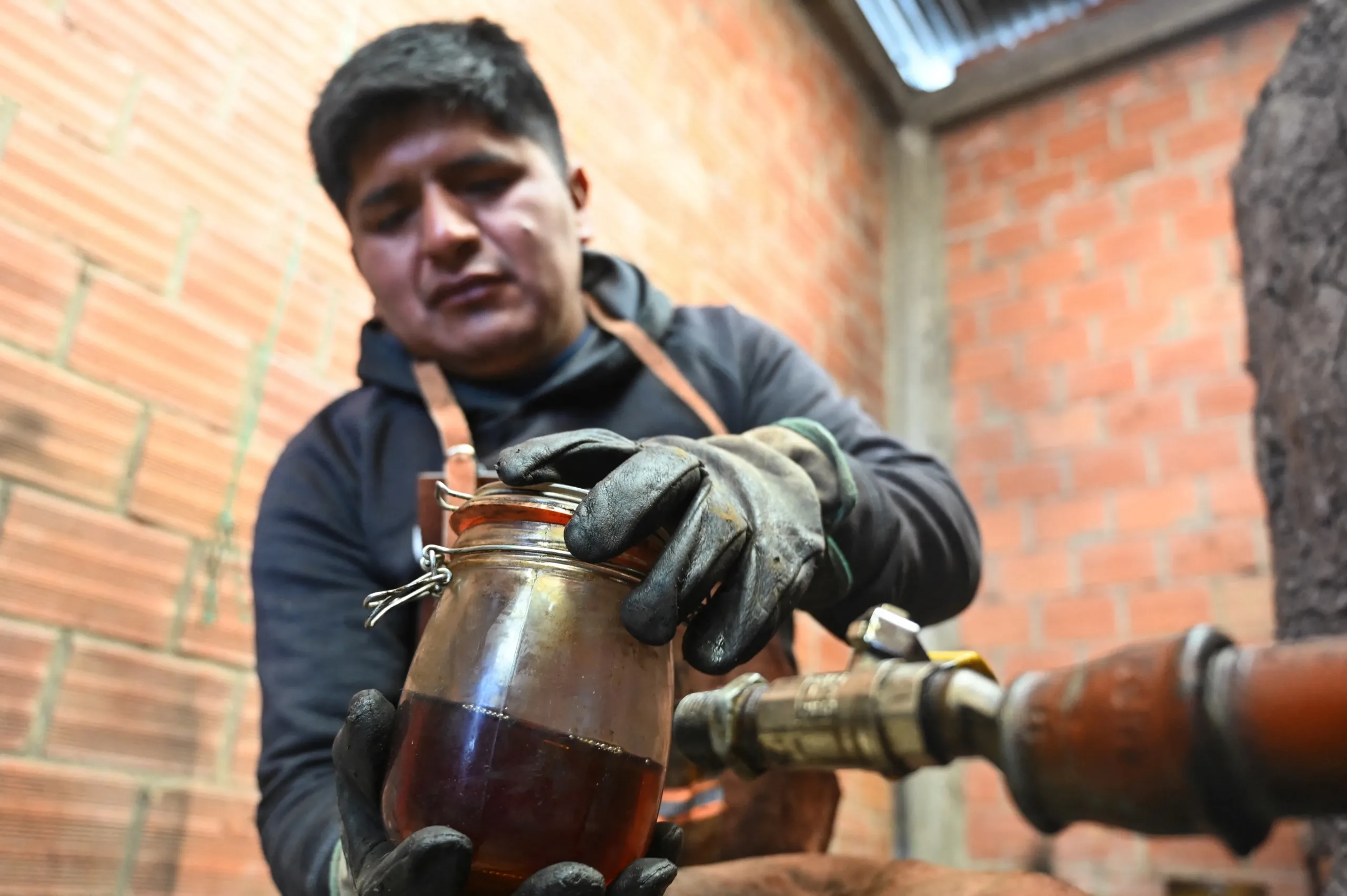
Ancocala, Bolivia. Altiplano resident Etson Machaca has built a small facility that converts discarded plastic bags, old tires and used oil into fuel for tractors. The operation provides crucial savings as higher fuel prices threaten farmers’ livelihoods in the region.
Waste provides fuel for farm equipment
Machaca’s plant is in Ancocala, a community within the rural municipality of Laja, roughly 35 kilometers (22 miles) from La Paz. Its daily output is just 80–150 liters of gasoline and diesel.
“We transform plastics, bags, tires, used oil. All of that has become raw material for us to produce fuel in the highlands,” Machaca said.
The facility relies on pyrolysis: materials are heated at high temperatures without oxygen, breaking them down into substances that can subsequently be processed into fuel.
Machaca said the output was not for sale and was used only to power his tractors and other agricultural equipment.
Savings after subsidy withdrawal
Production costs range from 7 to 10 bolivianos ($0.60 to $0.86) for each liter. Open-market diesel costs approximately twice as much, at 18 bolivianos ($1.54) a liter.
The savings have become vital for Machaca since Bolivia’s centrist administration withdrew state subsidies for diesel last month, seeking to strengthen public finances.
Across the Altiplano, many families have switched from livestock to tractors for more efficient plowing, leaving their farms dependent on diesel.
“If we don’t sow today or tomorrow, there is no production here on the Altiplano. So diesel is very important for us,” Machaca said.
Heavy dependence on imported fuel
Bolivia historically earned foreign currency through exports of natural gas. However, declining production of liquid hydrocarbons has increased its dependence on purchases from abroad.
Official figures show that the landlocked country in South America imports 95% of its diesel consumption and 60% of its gasoline consumption.
This news item was generated automatically by Cyprus Inform from publicly available materials. Report an error →