Christodoulides urges EU to revive mutual defence clause discussions
President Nikos Christodoulides has written to Ursula von der Leyen seeking renewed EU discussions on mutual defence, an update on proposals and a timetable for further action.
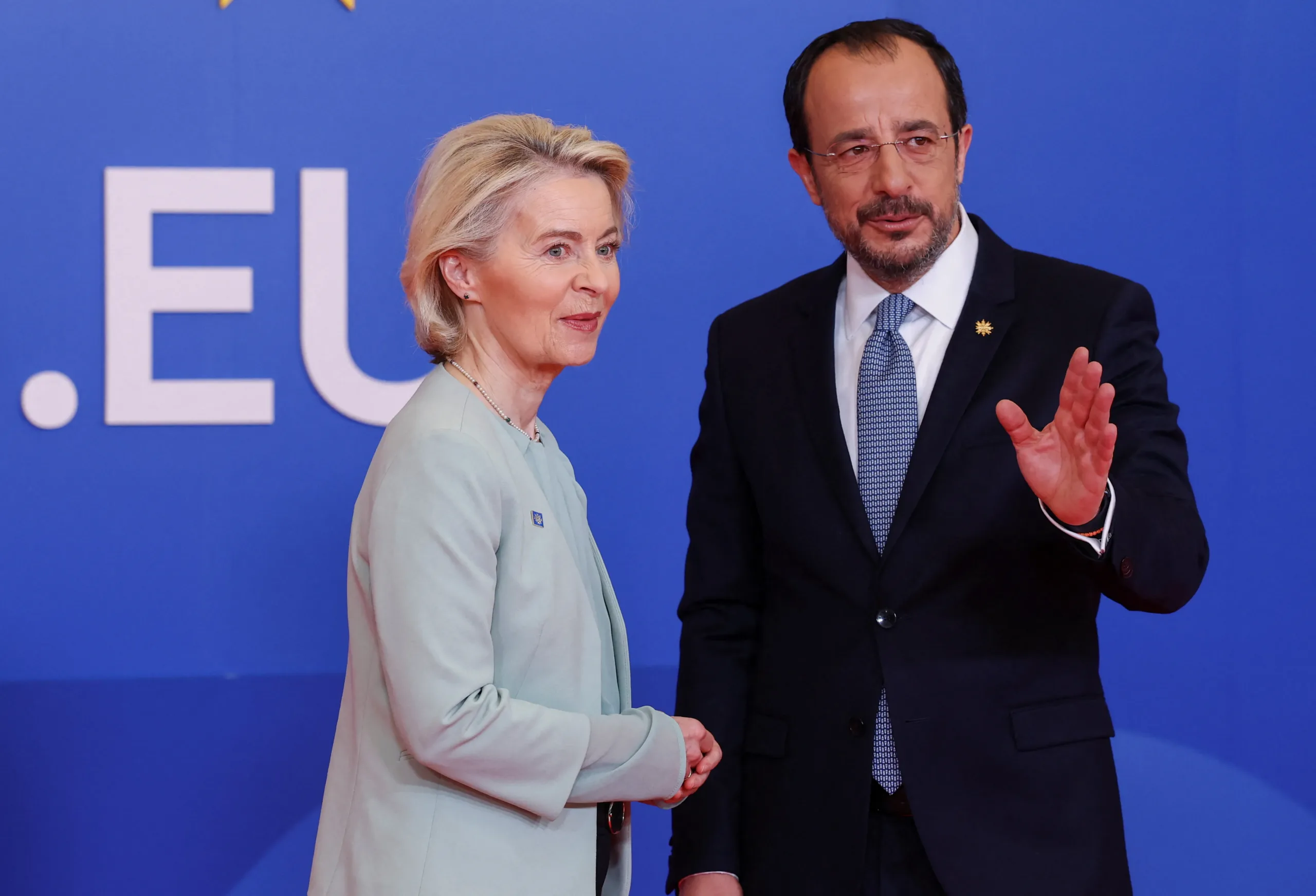
Nicosia, Cyprus. President Nikos Christodoulides has asked European Commission President Ursula von der Leyen to restart EU discussions about the bloc’s mutual defence clause. His letter follows the issue’s prominence at an April meeting of EU leaders in Cyprus, before it subsequently dropped off their agenda.
Letter seeks proposals and timetable
Victor Papadopoulos, director of the presidential press office, confirmed to the Cyprus Mail that the letter had been sent but said he could provide no additional information.
Related: Christodoulides Calls Varosha and Famagusta Port Plan Mutually Beneficial Before Erhurman Meeting
 RelatedChristodoulides Calls Varosha and Famagusta Port Plan Mutually Beneficial Before Erhurman Meeting
According to Politico, Christodoulides stressed in the letter that the provision was of paramount importance to the EU and its members, particularly amid geopolitical uncertainty.
“Given the gravity of the challenges we face, Cyprus would welcome the resumption of discussions at the relevant preparatory bodies. I would therefore appreciate an update on the proposals under consideration, as well as a timeline for next steps,” he wrote.
April summit called for defence framework
At the European Council summit held in Nicosia in April, leaders representing all 27 EU countries agreed to call for an operational defence guide.
Cypriot government sources said at the time that no action had followed in the decade since the clause’s first activation, which remained its only use.
France invoked Article 42.7 of the Treaty of the European Union, commonly called the Lisbon Treaty, following multiple terrorist attacks in Paris in November 2015.
Operational arrangements remain undefined
Under Article 42.7, an EU country facing armed aggression within its territory is entitled to aid and assistance from fellow members, using every means available to them. However, the provision has no accompanying formal operational arrangements or international military structures.
In April, government sources said procedures, available capabilities and response times among member countries remained unclear. They also highlighted uncertainty about which forms of support a country could seek, what individual members could contribute and how soon help could arrive.
The sources emphasised that assistance could not be treated as optional once a member invoked Article 42.7.
Related news

This news item was generated automatically by Cyprus Inform from publicly available materials. Report an error →

Write a comment