Qatar’s prime minister visits Tehran as US-Iran diplomacy remains stalled
Qatar and Iran discussed a phased proposal for shipping and mine clearance in the Strait of Hormuz as Washington plans increased sanctions on Tehran.

Tehran, Iran. Qatar’s Prime Minister Sheikh Mohammed bin Abdulrahman Al Thani visited Tehran on Thursday to seek renewed diplomacy as the United States and Iran exchanged accusations over Washington’s planned increase in economic pressure on Tehran.
Qatar and Iran discussed a proposed phased framework for the Strait of Hormuz, including a temporary joint Iranian-Omani shipping corridor and a mine-clearance project, Qatar’s foreign ministry said.
Meetings in Tehran
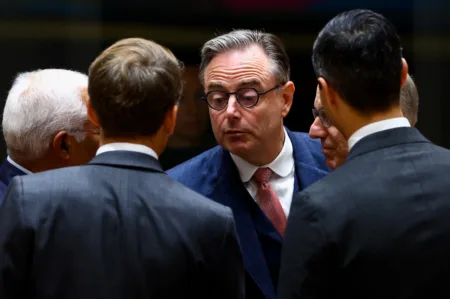
Sheikh Mohammed, who is also Qatar’s foreign minister, met Iranian Foreign Minister Abbas Araqchi, according to Iran’s foreign ministry channel on Telegram.
Qatar, a Gulf neighbour of Iran and a US ally, has acted as a back-channel negotiator between the warring parties. It also played a direct role in securing a June ceasefire that briefly halted hostilities.
Strait of Hormuz proposals
The war is nearing its sixth month, with fighting largely paused but no diplomatic breakthrough in sight. The United States and Iran remain divided over control of the Strait of Hormuz, a chokepoint for global oil supplies that Tehran has used as leverage.
A memorandum of understanding reached by the United States and Iran in June to end the conflict broke down partly over disagreements concerning the narrow waterway between Iran and Oman. Before the war began on February 28, one-fifth of global oil supplies passed through the strait.
Qatar’s foreign ministry said the officials reviewed regional developments and efforts to de-escalate tensions and create conditions for dialogue.
Economic pressure
Although strikes have stopped, Washington has announced plans to increase sanctions aimed at cutting Iran off from its trading partners.
Iranian Parliament Speaker Mohammad Baqer Qalibaf called for national unity against what he described as “all-out economic war”, warning that internal division was “exactly what the enemy wants”.
Ebrahim Azizi, head of the Iranian parliament’s national security committee, described the sanctions as an “inhumane and hostile act” but said they had lost their effectiveness.
Related news


This news item was generated automatically by Cyprus Inform from publicly available materials. Report an error →

Write a comment