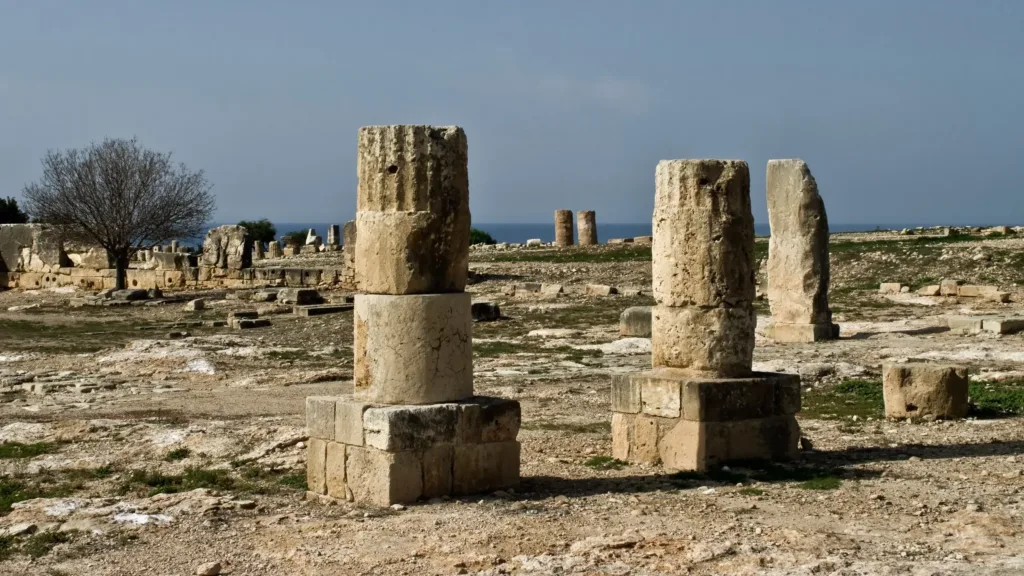
Sanctuary of Aphrodite, Kouklia: Palaepaphos history and visiting tips
About the place
Checked: 25 October 2026.
Sanctuary of Aphrodite at Kouklia: what it is and where
The Sanctuary of Aphrodite at Palaepaphos (Ιερό της Αφροδίτης, Iero tis Afroditis) is an archaeological site at the ancient city of Palaepaphos, or Old Paphos, in the village of Kouklia in the Paphos district. According to the Department of Antiquities, the city lies about 16 km east of Paphos, near the mouth of the Diarizos river. The site and the local museum are managed by the Department of Antiquities of Cyprus.
Palaepaphos was one of the most important city-kingdoms of Cyprus and a centre of worship of the goddess the Greeks called Aphrodite. According to UNESCO, the temple here was built by the Mycenaeans in the 12th century BC and was in use until the Roman period. The cult, according to the Department of Antiquities, came to an end in the 4th century AD, as Christianity spread across the island.
In September 1980 Palaepaphos and Nea Paphos became the first sites in Cyprus on the UNESCO World Heritage List. Today the sanctuary is part of the Paphos World Heritage Site: the Kouklia area includes the Temple of Aphrodite and the remains of Palaepaphos, and the other area is in Kato Paphos. There is no standing temple here: visitors see the foundations, walls and stones of two sanctuaries from different periods.
History: from a fertility goddess to a Roman sanctuary
The Department of Antiquities links the site to the cult of a fertility goddess who had been worshipped in Cyprus since the Neolithic. The Mycenaeans, who settled on the island at the start of the 12th century BC, adopted the local goddess and built a sanctuary in her honour. In UNESCO’s assessment, the local fertility goddess of Paphos in time became a widely revered symbol of love and beauty.
Myths are also attached to the site, and they should not be confused with history. By tradition, the founder and first high priest of the sanctuary was the legendary local king Kinyras. Another legend names Agapenor, king of Tegea in Arcadia, as the founder. According to ancient myth, Aphrodite was born from the sea foam off the coast of Cyprus, and UNESCO refers to the island as her legendary birthplace.
According to the Department of Antiquities, Palaepaphos remained the largest religious centre in western Cyprus from the Geometric period to the end of the Classical period. At the end of the 4th century BC the last king, Nikokles, moved the capital to Nea Paphos, but the sanctuary kept the city important. In Roman times the city was the centre of the Cypriot League, which was in charge of religious affairs, the imperial cult and the minting of the island’s bronze coinage.
What survives at the sanctuary
In the southern part is the first sanctuary of Aphrodite, built in the Late Bronze Age. It consisted of an open courtyard and a hall with a conical stone, the symbol of the Great Goddess. The Roman sanctuary was built to the north of it at the end of the 1st or the start of the 2nd century AD.
Nearby is the Roman House of Leda. A 2nd-century AD mosaic of Leda and the swan was found in its dining room; a copy is on display on site, and the original is kept in the Kouklia museum. The Department of Antiquities also describes other parts of the ancient city, such as the north-east gate on Marchellos hill and the city wall, so check in advance which areas are currently open to visitors.
In the Middle Ages the town was called Couvouclia and was the centre of the sugar plantations and sugar mills of the Paphos area. The Lusignan manor house was built in the 13th century as the administrative centre of the plantations, and its Gothic hall is considered one of the finest surviving secular buildings of the Frankish period on the island. After 1571, in the Ottoman period, the manor house served as the administrative centre of the Kouklia estate.
The Palaepaphos museum and planning your visit
The local archaeological museum is in the east wing of the medieval Lusignan manor house, on the grounds of the site. In the first room a Roman mosaic lies on the floor, and finds from the sanctuary are shown there too, including the conical stone that served as the cult image. The second room displays finds from the necropolises around Kouklia, from the 2nd millennium BC to Roman times.
Kouklia lies between Paphos and Limassol, not far from the coast; follow the sat-nav and the road signs for Kouklia. The easiest way to get there is by car or on an organised tour. If you are travelling by public transport, check the route and connections with the operator in advance.
According to the Department of Antiquities, one ticket covers both the archaeological site and the local museum. In 2024 the Department changed the opening hours of the sanctuary and the museum, so schedules in older guidebooks may be wrong. Allow time for both the grounds and the museum, and take the rough, stony stretches slowly.
Safety, heat and etiquette
Most of the site is an open area with ancient foundations, scattered stones and uneven ground. You will need sturdy closed shoes, and it is best not to climb on the ancient walls. Keep children close, especially near the excavation trenches and drops in level.
In summer the open hill is hot and has little shade, so take water, a hat and sun cream. It is better to come in the morning or towards closing time than in the middle of the day. We cover heat and sun in Cyprus in more detail in a separate article.
The information on accessibility differs: on the site’s page the Department of Antiquities says the grounds are wheelchair accessible, while the museum’s page says the museum is not. If this matters to you, check the arrangements in advance. This is a protected monument: do not take away stones or potsherds, and do not touch the mosaics.
What is nearby
The second part of the Paphos UNESCO site is Kato Paphos, with the ruins of Nea Paphos, Roman mosaics and the Tombs of the Kings necropolis. The Tombs of the Kings have their own guide, and our overview of the island’s archaeology covers the UNESCO cultural sites in Cyprus.
On the coast not far from Kouklia is the rock of Petra tou Romiou, which tradition names as the birthplace of Aphrodite. It is often combined with a trip to the sanctuary, but it is a separate place with its own rules for staying safe on the shore.
The church of Panagia Katoliki stands next to the sanctuary and has its own article. The museums of Paphos are described in our overview of Paphos museums, and our general guide to the city and the district will help you combine the trip with other places.
What to check before you go
Before you go, check the Department of Antiquities website for the current opening hours of the sanctuary and the museum, the weekly closing day, ticket prices and holidays. The schedule of this site has changed before, so it is best not to rely on third-party websites.
If someone in your group uses a wheelchair, check with the Department of Antiquities which parts of the grounds and the museum are accessible. Also ask whether the House of Leda and other parts of the ancient city are open at the moment, because individual areas can be closed for research or conservation.
In summer, check the weather forecast and heat warnings, and if you are using public transport, check the route with the operator. If you plan to go into the church of Panagia Katoliki, check its access and visiting rules separately.
Continue planning
- Paphos: archaeology, neighbourhoods, beaches and itineraries
- The Church of Panagia Katoliki in the village of Kuklia
- Tombs of the Kings, Paphos
Official sources
- Cyprus Department of Antiquities: Palaipafos and the Sanctuary of Aphrodite
- Department of Antiquities: Local Archaeological Museum of Palaipafos
- UNESCO World Heritage Centre: Paphos
Columns at the Sanctuary of Aphrodite in Kouklia · Photo: Nikodem Nijaki · CC BY-SA 3.0 · converted to WebP and resized.
