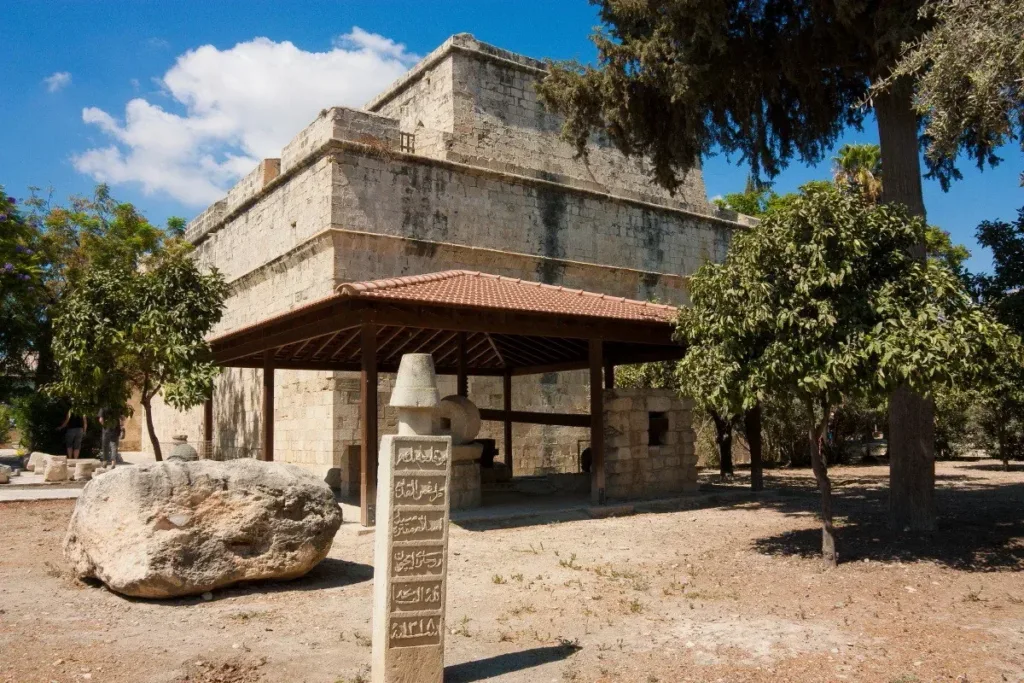
Limassol Castle and the Medieval Museum
About the place
Checked: 2 October 2026.
The castle in Old Limassol
Limassol Castle is situated in the historic centre, not far from the old harbour. Today, it houses the Cyprus Museum of the Middle Ages. When visiting, it is important to consider two perspectives: the fortress itself as an architectural monument, and the collection of artefacts, which tells the story of life on the island throughout different periods.
It’s a convenient stop for a day out in the city without having to travel too far. You can round off your visit with a stroll through the old streets and the harbour area, but the museum deserves a visit in its own right. If you simply walk round the building from the outside, you’ll see how it fits into the cityscape, but much of the experience will be found inside.
Do not confuse the Medieval Museum in the castle with the Limassol District Archaeological Museum. Whilst their themes overlap in the broader narrative of the island, their collections and locations are different. If you’re short on time, choose a venue based on your interests, rather than simply because it has the word ‘museum’ in its name.
The history of the building and a well-known story
The history of the fortification comprises several phases of construction on the site of an earlier Byzantine structure. The official description mentions a 13th-century castle and subsequent alterations. The present complex cannot be viewed entirely as a static structure from a single era: its architecture reflects a long process of reconstruction and changing functions.
Limassol is associated with the wedding of Richard the Lionheart and Berengaria of Navarre in 1191. However, the official tourist guide describes the claim that the chapel at the present-day castle was the exact site of the ceremony as a legend. This popular story should be recounted with a caveat, without presenting the existing walls as definitive proof of the wedding venue.
During the Ottoman and British periods, the complex was used for administrative, military and prison purposes. This shift in functions helps us to understand the layout of the rooms and the building’s future as a museum. Such a narrative is more accurate than the image of a purely chivalric castle, frozen in a single medieval era.
How to view the museum collection
The collection includes ceramics, gravestones, weapons, crosses, coins and other objects. Start with a brief overview of the sections, then choose exhibits that allow you to link several themes together. For example, a religious artefact and an everyday object can illustrate different aspects of life, even if they date from a similar period.
Please read the dates and origins in the captions, without assuming that all the items were found inside the castle. A museum artefact may represent a different part of the island or a different historical context. This is particularly important for understanding the collection as a record of Cyprus’s heritage, rather than merely the archaeology of a single building.
Compare materials and manufacturing techniques: carved stone, metal and ceramics require different skills and serve different purposes. This approach makes the tour informative without the need for a long lecture. If the information about an exhibit is unclear, it is better to ask a member of staff than to speculate on its purpose based on its appearance.
Architecture along the visitor route
The passageways between the rooms allow visitors to observe the vaults, the masonry and the layout of the interior. Do not exclude them entirely from the museum tour: the building itself is also a historical artefact. At the same time, do not assign a single date to each element without providing an explanation of the specific construction phase.
The staircases and accessible upper sections reveal a different scale of the building and its relationship with the city. Please check with staff to confirm the open route. If part of the floor is closed off, do not attempt to find your own way round via the staff area: this restriction applies regardless of your interest in architecture or photography.
For an external view, it’s worth returning to the castle after visiting the museum and looking at it from the square. This allows you to appreciate the small openings, the massiveness of the walls and the surrounding streets in the context of what you’ve seen inside. Please do not block the entrance with a group photo and leave clear passageways for other visitors.
Opening hours and timetable
Before you go, check the museum’s current opening hours and any exceptions during public holidays. The neighbourhood can get quite busy in the evening, once the museum has closed to visitors. To make the most of your visit, plan your visit around the museum’s opening hours, and save a stroll around the square and the harbour for a less busy time of day.
Please check the official information for ticket prices, concessions and any possible changes. Do not automatically assume that the terms and conditions for Kolossi or any other monument apply to Limassol Castle. If you are interested in a specific exhibition, please check separately to confirm that it is currently on display and forms part of the standard tour route.
Set aside time to read the captions, rather than just walking through the galleries. Just because the building is compact doesn’t mean the collection is best viewed in a hurry. For your first visit, it’s a good idea to choose a few key themes and leave yourself the option to return if you’d like to explore a particular section in more detail.
Access and visiting with family
Walking from your chosen car park or bus stop helps you avoid having to search for a parking space right next to the castle. Please bear in mind the traffic arrangements in the historic centre. Do not rely on an old photograph showing an open space: temporary events, roadworks and restrictions may affect vehicle access.
If you have limited mobility, please check in advance regarding the entrance, staircases and accessibility of the individual floors of the museum. Being able to reach the castle does not necessarily mean you will be able to view the entire exhibition. It is a good idea to agree on a route with your guide and the staff before buying tickets for a packed day’s programme.
When visiting with children, choose topics that are easy for them to understand: the materials used in artefacts, the purpose of coins, or the features of an old building. Do not allow them to touch the exhibits or climb over the barriers. If the group is tired, a short break outside the exhibition hall is better than rushing through the remaining rooms without paying attention to what’s on display.
What to add to the itinerary
The castle can be easily combined with a visit to the old harbour and a stroll through the historic streets of Limassol. These areas offer a glimpse into modern life in the neighbourhood surrounding the monument. Please do not regard the cafés, shops and neighbouring buildings as part of the museum grounds: they have their own rules and opening hours.
Kolossi could serve as a separate extension of the theme of medieval fortifications, provided there is time to travel there. There, the main attraction is the tower and the surrounding architectural heritage; here, it is the museum collection in the town castle. This combination helps to compare the different functions of the monuments without repeating the same story.
Please check the current visiting conditions against the official sources listed below. Opening hours, tickets and accessible areas are not presented here as a definitive guarantee. A careful exploration of the collection and the building itself allows you to see more than just the famous wedding scene, whilst maintaining historical accuracy and a leisurely pace.
Continue planning
- Limassol: neighbourhoods, attractions and itineraries
- Larnaca Castle: history, museum and a visit
- The Sanctuary of Apollo Hylates: archaeology and visiting the site
Official sources
Photo: Paul Lakin · CC BY 3.0 · converted to WebP and resized.
