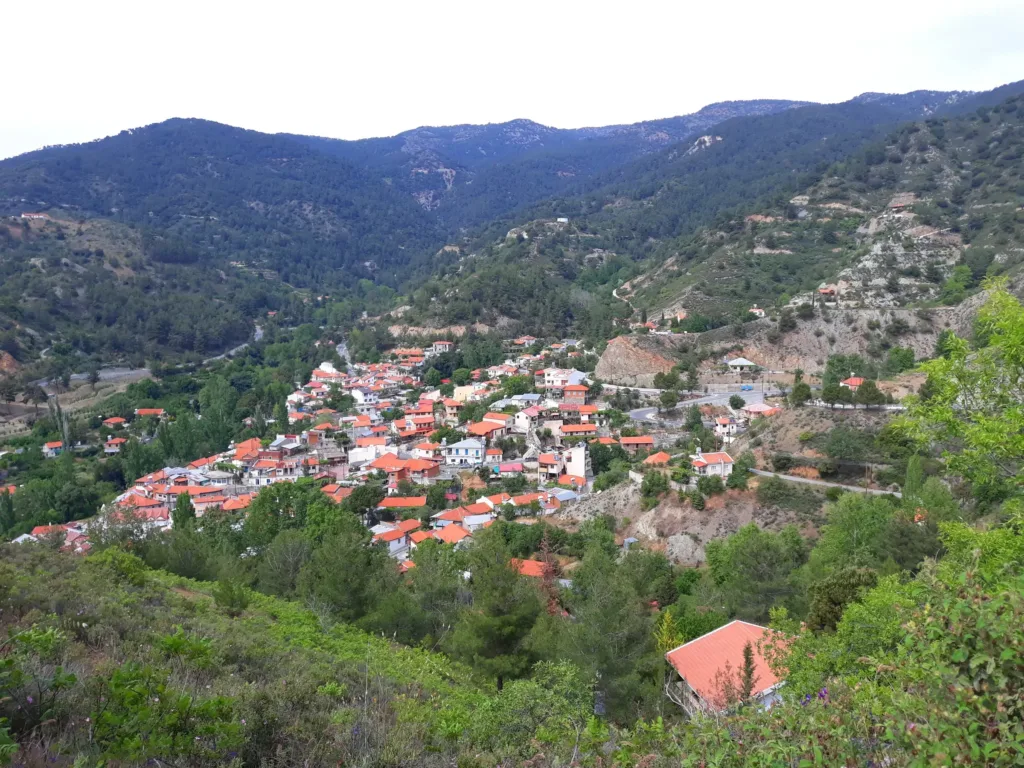
Foini (Fini), Cyprus: Troodos pottery village and Hantara waterfall
About the place
Checked: 25 October 2026.
Foini at a glance: where it is and what it is known for
Foini (Greek: Φοινί) is a mountain village in the Limassol district on the slopes of the Troodos Mountains, about 44 km from Limassol. According to Visit Cyprus, it lies 920 m above sea level; at the 2021 census it had 347 residents. The village is known for its pottery, traditional furniture and loukoumi (Cyprus delight), and for the nearby Hantara waterfall.
The official Latin spelling is Foini, but Fini and Phini are also found on signposts and in guidebooks. In Greek the name is written Φοινί, and searches also use Φινί.
The village is surrounded by pine groves and forest, and Trooditissa monastery is close by: according to All About Limassol, it is about 2.3 km away by car. For visitors Foini combines village crafts, a small museum, mountain scenery and cool summers.
History of Foini and its name
There are various explanations for the origin of the name. Visit Cyprus gives two versions: from the name of the Frankish feudal lord Juan De Fejniu, or from the Greek word ‘foinikas’ (φοίνικας), ‘palm tree’, or the name of its fruit. The All About Limassol portal considers a third version the most likely, linking the name with the colour of the local red soil: the ancient Greek root ‘fin-’ is associated with the meaning ‘reddish’.
Old bridges in the surrounding area, attributed to the Venetian period, recall the village’s past. According to All About Limassol, they show that the area was full of life in the 16th century; one of them, the Bishop’s Bridge, is very close to the village.
Foini’s main heritage is pottery. According to All About Limassol, several centuries ago the village was one of the three main pottery centres of Cyprus, together with Lapithos and Kornos. The local red clay was well suited to the large jars called pitharia (πιθάρια), which were used to store wine, water and farm produce.
What to see in Foini
The Pilavakeion is a private folk art museum that Visit Cyprus lists among the village’s main sights. It tells the story of village life and crafts; as it is private, check visiting times in advance.
The village still has pottery workshops, where you can watch the potters at work and buy earthenware, as well as loukoumi workshops. According to All About Limassol, the art of making Foini loukoumi was brought from Egypt by Phylactis Pilavakis.
The village’s main church is dedicated to the Holy Cross (Timios Stavros); according to All About Limassol, it was built in the 18th–19th centuries. About 1.5 km from the village stands the church of the Holy Unmercenaries (Agioi Anargyroi), the last remnant of a vanished monastery; villagers celebrate Easter Monday in its courtyard. The village chapels include newer ones, St Anne (1993) and St George (2001–2002), and the chapel of St Marina was built next to an ancient place where the saint was venerated.
Crafts, loukoumi and festivals
Pottery has a long tradition in Foini: the local red soil was ideal for large earthenware jars. Today the jars and pottery have become a symbol of the village, and the workshops are still in operation, selling their wares to visitors.
Visit Cyprus also mentions Foini’s traditional furniture, for which the village is as well known as for its pottery. Another local speciality is loukoumi, made in village workshops; it is an easy edible souvenir to take home.
According to Visit Cyprus, the Foini Traditional Festival with a bazaar and folk entertainment takes place on the first Sunday of August, and a grape festival celebrating the harvest is held in September. Dates may change, so check them closer to your trip.
Nature, the waterfall and the surrounding area
Below the village the Diarizos river flows through the valley, and a viewpoint near the village looks across the valley towards Paphos. All around are pine groves and forest, pleasant for walking in the shade even in summer. Old fountains survive in the village, including the Pellomarou fountain, named after a woman who once lived here.
Between Foini and Trooditissa monastery is the Hantara (Χαντάρα) waterfall: the water drops about 8 m over volcanic rocks, and in summer people come to cool off by the cold water. The rocks by the water are slippery and the water level changes after rain, so wear sturdy shoes; more about the waterfalls of Cyprus is in a separate article on our site.
A path runs from the waterfall to Trooditissa monastery through dense forest along the river, and next to the monastery is the Trooditissa picnic site. According to All About Limassol, the monastery dates back to Byzantine times and stands higher than any other monastery in Cyprus.
Getting to Foini and planning your visit
Foini is about 44 km from Limassol, and the nearest large landmark is the resort area of Platres. The Visit Cyprus circular route ‘Celebrating the Vine’ reaches the village from above, from Prodromos via Lemithou, Palaiomylos and Trooditissa monastery, and then continues to Kato and Pano Platres.
The roads in the area are winding and narrow, and Visit Cyprus specifically advises travellers on this route to take extra care on bends. Allow half a day for the village, the workshops and the museum, and most of a day with the waterfall and the monastery.
In summer Foini attracts visitors with its cool air, and spring and autumn are good for forest walks. In winter it can be cold and damp at this altitude, so check the weather and road conditions. Public transport to the mountain villages is limited; most people travel here by car.
What to check before visiting Foini
Check in advance whether the Pilavakeion museum is open and whether the pottery and loukoumi workshops are working on the day you choose: these are private and family businesses, and their hours change. Ask through the Foini community office, Visit Cyprus information centres or the owners directly.
Before setting off on your walk to the waterfall, check the weather and the water level: after heavy rain the path becomes slippery and swimming is dangerous. Check the Visit Cyprus calendar for the dates of the August festival and the September grape festival.
In the church of the Holy Cross and the chapels, follow the usual rules: clothing that covers the shoulders and knees, quiet voices, no flash near icons and no photography during services. If you come on a feast day when residents gather in the churchyard, ask permission before photographing people.
Continue planning
Official sources
- CYSTAT — Census of Population and Housing 2021: population by place of residence
- Visit Cyprus — official Foini village page
- All About Limassol — Foini (Fini) village guide: pottery, churches, surroundings
- Visit Cyprus — Cyprus Authentic Route 4 brochure, Celebrating the Vine
Foini in its mountain valley · Photo: Xaris333 · CC BY-SA 4.0 · converted to WebP and resized.
