Mesaoria. Christian holy sites in central Cyprus
Description
Strange 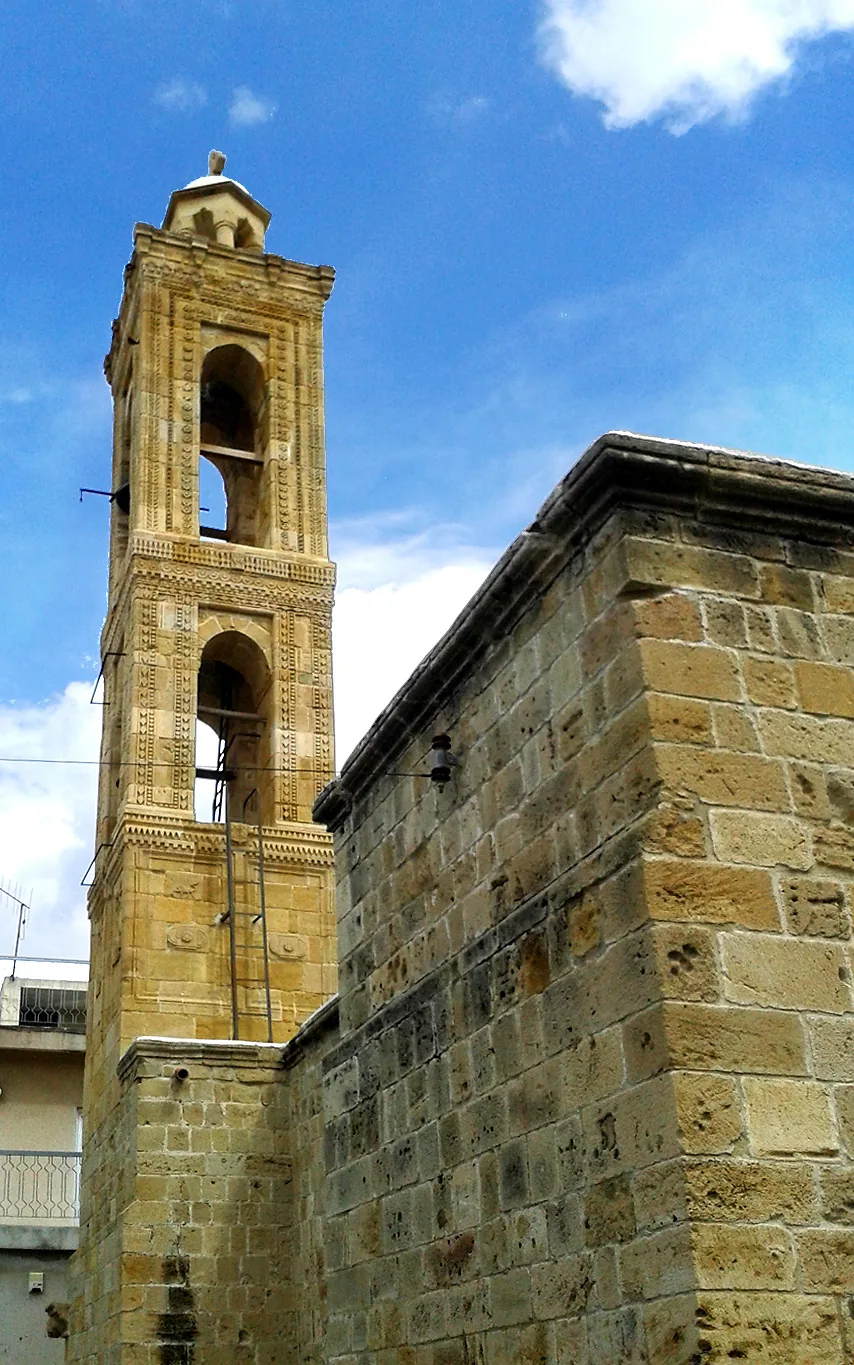 as it may sound, many people hold precisely this view: Nicosia, the capital of Cyprus, unlike other European capitals, is the least attractive Cypriot city for tourists.
Particularly in summer, when temperatures in the central part of the island rise above 35°C, few people are keen to leave the coast and wander the sweltering city streets.
However, there is plenty to see in Nicosia. And if you do decide to visit the Cypriot capital, I strongly recommend doing so as part of an organised tour accompanied by a knowledgeable guide.
That way, you’ll see the city’s most important and interesting sights, whilst minimising the time spent wandering around in the heat.
One of the best tours, which includes not only a tour of the capital but also visits to two important Cypriot holy sites (the churches of Cyprian and Ustinia and the monastery of Saint Thekla), is the pilgrimage route through Mesaoria. This is the name given to the island’s plain, situated between the Troodos and Pendachthilos mountain ranges.
Visiting Cyprian and Justina
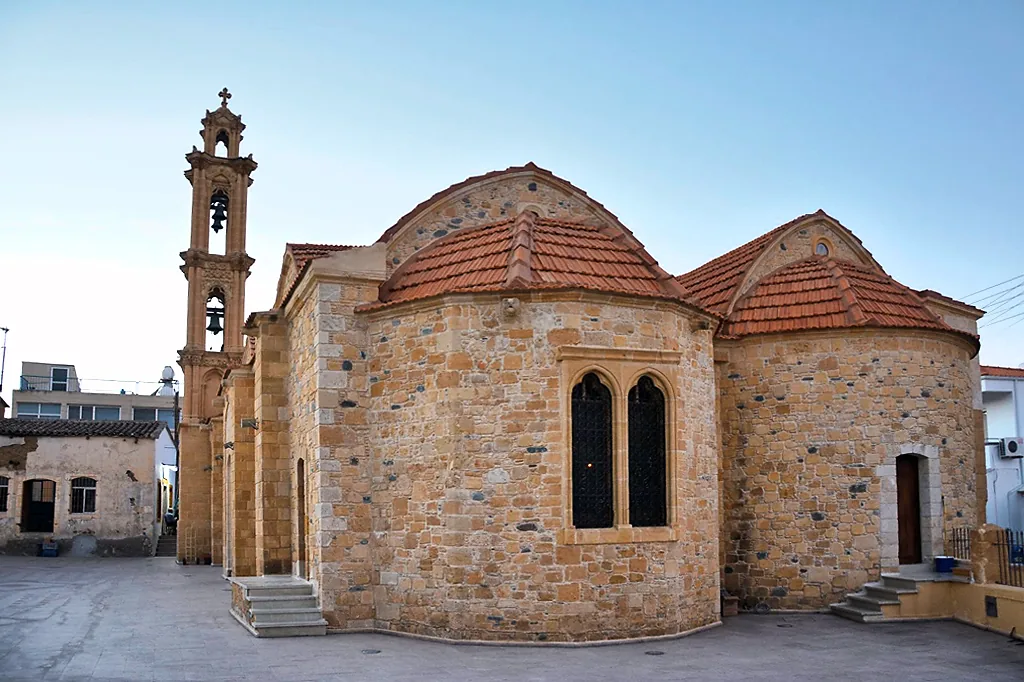 Leaving Limassol, we set off along the motorway towards Nicosia. The 82-kilometre journey will take us about an hour. The first stop on our journey will be the village of Meniko. It lies 20 km west of Nicosia. This adds a further 15–20 minutes to our journey time. However, the time flies by unnoticed when the group is accompanied by an experienced tour guide.
The village of Meniko has recently become particularly popular with Russian tourists and pilgrims. Rumours of the miraculous relics of Saints Cyprian and Justina, said to protect against the evil eye and the effects of black magic, have spread far beyond the island’s borders, and every year more and more people come to the church to touch the relics and venerate the icon of Saint Cyprian.
The villagers are delighted by this interest from foreigners, and, on the instructions of the local authorities, a sign has even been erected with the words ‘Welcome’ in Russian.
According to legend, King Pierre I de Lusignan, who ruled in Jerusalem and Cyprus in the mid-14th century, was healed of a serious illness after venerating the relics of Saints Cyprian and Justina, and ordered a new church to be built on the site of the small chapel. Many of the church’s icons date from the 16th and 17th centuries. After venerating the icon of the holy martyr Cyprian and collecting holy water from the spring, we set off again. Our route takes us to the island’s capital.
The tour guide told us that, following the reunification of Berlin, Nicosia remained the only divided capital in the world. Today, the population of the Greek part of the city stands at almost 300,000, whilst that of the Turkish part is just under 85,000.
The diversity of the ancient capital
I have been to Nicosia many times, but each time the city leaves me with mixed impressions. It is here that the influence of the East is keenly felt.
A modern commercial and business centre with wide streets, new contemporary buildings and cars rushing by stands side by side with the old town, its narrow alleyways and the occasional dilapidated, low-rise building.
Water tanks jutting out from the roofs of houses are particularly noticeable on low-rise buildings. They lend the city’s appearance a certain untidiness. The building site right in the city centre, by the Byzantine walls, also spoils the impression. Freedom Square, currently surrounded by a hoarding, is set to be unveiled to the townspeople in its new guise next year.
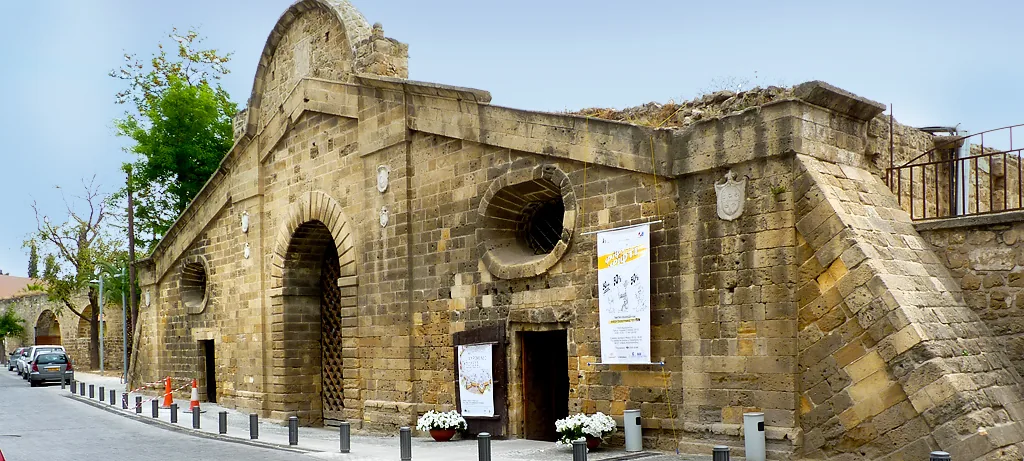
We got off the bus near the Byzantine walls and made our way deeper into the old town towards St John the Theologian Cathedral. Quite small in size and squeezed between the houses, the cathedral makes absolutely no impression until you step inside.
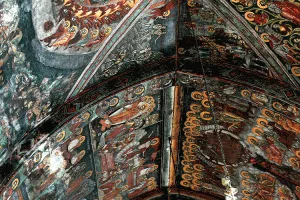
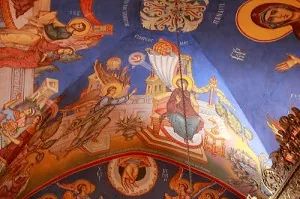
All the interior walls of the cathedral are adorned with frescoes dating from the reign of Archbishop Philotheos in the mid-18th century. They depict biblical scenes as well as episodes from the life of the Christian community in Cyprus.
Crystal chandeliers and a lavish gold iconostasis complement the magnificent interior décor of the cathedral. The Cathedral of St John the Theologian is the only church in Nicosia where the frescoes have been fully preserved. It was built in 1662 at the behest of Archbishop Nikiforos and is now the country’s principal cathedral. Traditionally, it is here that the enthronement of the new Archbishop of Cyprus takes place.
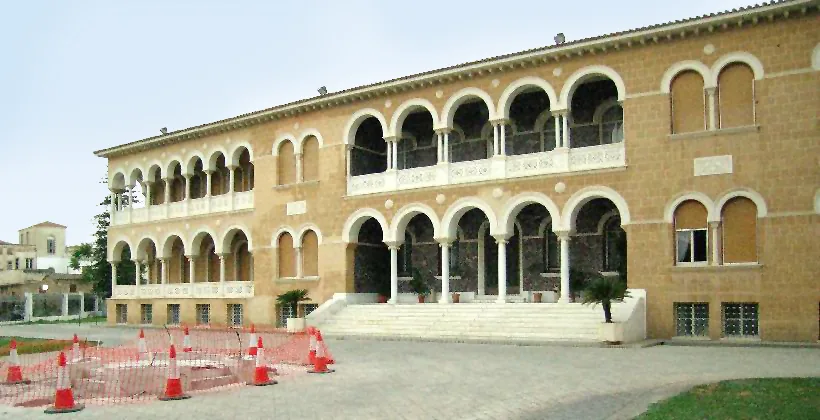
Leaving the cathedral, we headed for the Archbishop’s residence, which is located nearby on Kyprianou Square.
The new residence, built in 1960, is in the Neo-Byzantine style and is one of the capital’s most visited attractions. In front of the building stands a bronze statue of Archbishop Makarios, the first President of Cyprus.
 Next, history and archaeology enthusiasts made their way to Cyprus’s main historical museum.
However, in my opinion, it is much more interesting to take a stroll along Ledra Street, the city’s main pedestrianised street. To do this, it is best to head back to the Venetian Walls and walk around the old town, keeping to the right the whole time. This will take you no more than 10–15 minutes. Right in the centre of Ledra is the Debenhams shopping centre. If you walk round the building to the right, you can climb the observation tower and see the whole town from above.
Whilst strolling around Ledra and browsing the shops, don’t forget to keep an eye on the time so you don’t miss your bus.
To the Monastery of Saint Thecla
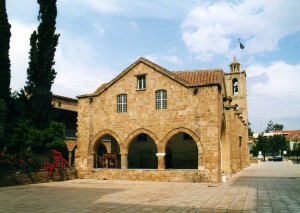
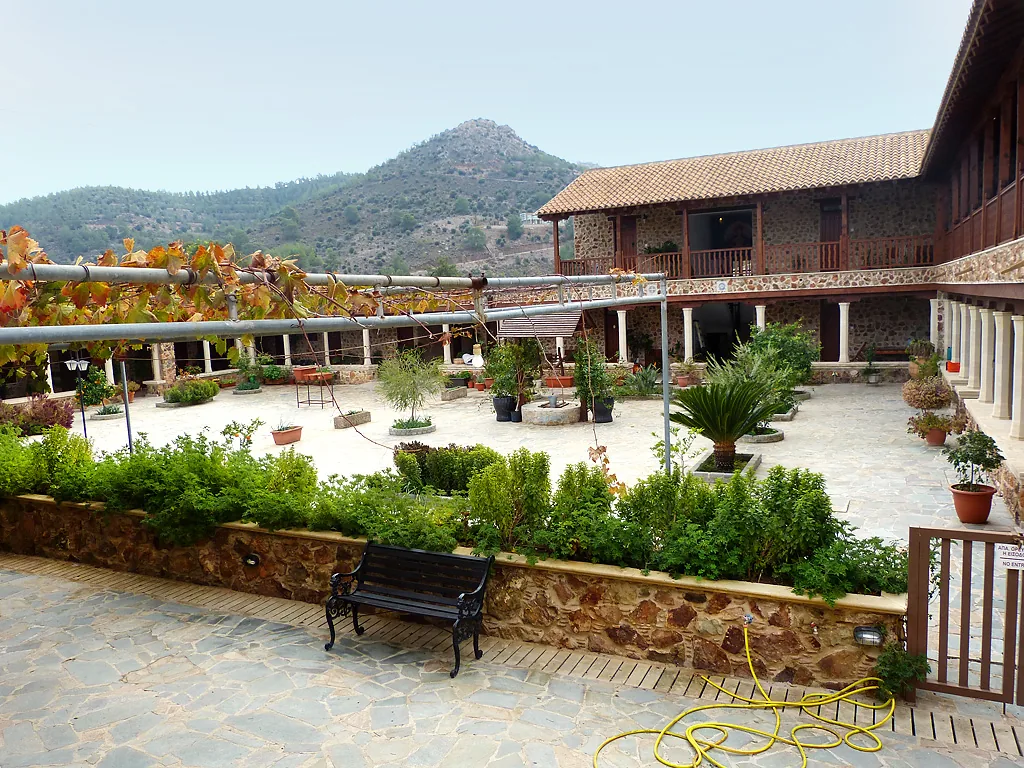
 Having bid farewell to Nicosia, we set off for the convent of Saint Thekla the Healer, one of the First Apostles. The convent is situated not far from the motorway linking Nicosia and Limassol.
After turning off the main road, we soon stopped at a building that bore no resemblance to a holy abbey. It turns out that, because Cyprus was constantly subjected to Arab and Turkish raids, Christian buildings were deliberately designed to be as inconspicuous as possible from the outside, as Muslims would destroy them first and foremost.
As a result, many ancient Cypriot churches are concealed beneath ordinary gabled roofs. Upon entering the monastery, you feel as though you’ve dropped in to visit old friends. Inside is a small, cosy courtyard with lemon and orange trees and benches in the shade: life here flows calmly and unhurriedly.
Near the entrance to the small church, there are photographs of those who have been cured after visiting the monastery. Many Cypriots come to the monastery to pray for the health of their loved ones, as well as to collect therapeutic mud. It is believed that the mud helps with various skin conditions. There is also a holy spring nearby. Before you leave, be sure to pop into the monastery shop. Olive oil, sweets, herbal blends, honey — all of these are handmade by the nuns, and they make wonderful gifts to bring back from Cyprus.
The journey back flies by even faster; you’ll feel pleasantly tired, and you’ll still have some lovely moments ahead spent at your computer, sorting through the photos you’ve taken, and telling your friends all about your wonderful trip to the heart of this ancient island in the Mediterranean.
Cost of the excursion:
- adults €50;
- child €25.
To book the excursion, you can fill in the online booking form or email us at .