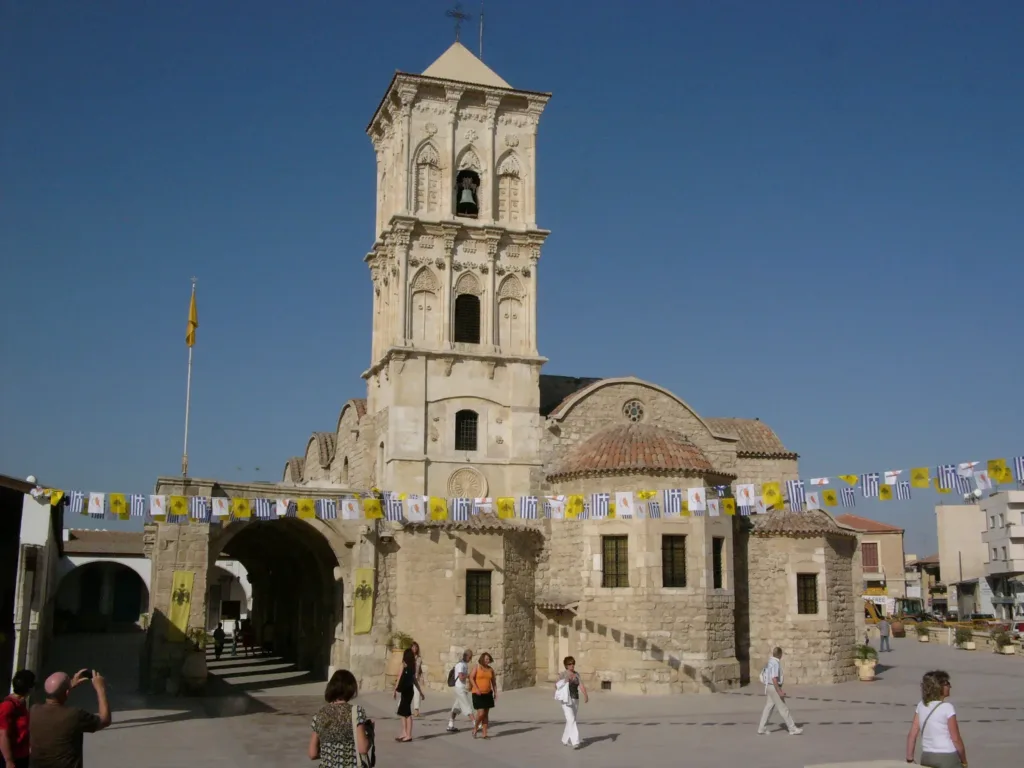
The Church of Saint Lazarus in Larnaca: history and a visit
About the place
Checked: 2 October 2026.
A church in the centre of Larnaca
The Church of Saint Lazarus is situated on its own square in the historic centre of Larnaca. The stone building, the bell tower and the surrounding streets make it a convenient stop in its own right during a stroll through the city. The church is still in active use: visiting times depend not only on tourist opening hours but also on the schedule of services.
People come here to see the Byzantine architecture, the carved iconostasis and the site which, according to church tradition, is associated with Lazarus. You can combine all these attractions in a single, leisurely visit. Start with a general look around the building and the square, then go inside, taking care to respect the services taking place in the church.
Various guidebooks refer to the site as the Church, Temple or Cathedral of Saint Lazarus. The names ‘Agios Lazaros’ and ‘Saint Lazarus Church’ are useful for finding it on a map. We are referring specifically to the church in Larnaca, not to any other religious monument dedicated to Lazarus.
History and Church Tradition
An official tourist source dates the church’s construction to the 9th century and links it to the Byzantine Emperor Leo VI. The church was subsequently altered and restored. The building’s history is therefore not limited to its original construction: its current appearance reflects several stages in its existence.
Church tradition recounts Lazarus’s arrival in Cyprus following his resurrection by Christ and his ministry as Bishop of Kition. This is an account of Christian doctrine and tradition. In a tourist guide, it should be distinguished from architectural dating and other information established by historical research.
Beneath the altar area lies a site venerated as the saint’s tomb. For the faithful, it holds a spiritual significance in its own right. Visiting such a space does not transform religious identification into a proven biographical reconstruction; a respectful account is entirely compatible with an accurate indication of the nature of the source.
Exterior architecture
Before entering, walk around the accessible part of the square and take a look at the stonework, the building’s proportions and the bell tower. Changing your vantage point helps you to see the cathedral in its entirety, rather than just its most recognisable façade. Bear in mind the flow of people: the square also serves as a route for everyday city traffic.
The official description states that the church was restored in the 17th century and that its original domes and bell tower were lost during the early Ottoman period. Therefore, the elements visible today cannot, without further clarification, be regarded as a structure from the time of its foundation that has been fully preserved. For details of a specific construction phase, on-site explanations are helpful.
Please do not climb onto fences, architectural features or restricted areas just to get a group photo. Publicly accessible areas are sufficient for viewing the exterior. If a service or wedding ceremony is taking place, keep the entrance clear and do not include guests or worshippers in your photographs without their consent.
The iconostasis and the venerated tomb
Inside, the main artistic focal point is the carved, gilded iconostasis. View it as a whole: the individual icons, decorative motifs and the overall layout of the space complement one another. To view it properly, it is best to stand to one side of the main aisle, so as not to disturb those who have come to pray.
Please only plan to visit the revered tomb when it is open to the public. The small underground space requires careful movement and may be difficult for visitors with reduced mobility. Check the conditions with the staff before promising all members of the group the same opportunity to view the site.
At the shrine, please respect the local rules, do not touch any objects that are off-limits, and do not hold up other visitors whilst taking photographs. If it is very busy inside, you may wish to explore another part of the shrine first or return later. A leisurely visit is more rewarding than trying to see everything at once.
The museum and a stroll around the neighbourhood
Next to the church is a Byzantine museum housing religious artefacts and icons. Treat this as a separate stop: opening hours and admission conditions may differ from those of the church. Before visiting, make sure to enquire specifically about the museum, rather than just asking whether the church is open to worshippers.
The historic streets around the square allow you to continue your walk without travelling between distant sites. Choose a route along the accessible pedestrian walkways and take in the urban surroundings, rather than just the souvenir shop windows. The residential buildings and commercial premises around the cathedral are not part of the exhibition open to the public.
Larnaca Castle and the Finikoudes Promenade can be visited on the same day in the city. These are separate attractions, each with its own purpose and opening hours. First, decide whether you want to visit the castle museum or simply view the fortress from the outside: the pace of the rest of your walk will depend on this.
When to arrive and how to behave
For an architectural tour, it is best to choose a time when tourist visits do not disrupt the service. Please check with the parish for the timetable of services, feast days and the availability of specific rooms. An open door during prayer does not mean that you are free to walk in front of the altar or discuss the tour loudly.
Please wear modest clothing that covers your shoulders and knees. When taking photographs indoors, ensure you comply with the rules in force and do not use a flash. If you wish to photograph an icon or the interior, first make sure that this is permitted and that the shot does not intrude on the privacy of those at prayer.
The veneration of Lazarus is particularly evident in the run-up to Easter, when religious events take place in the town. This is an interesting experience for visitors, but it does disrupt the usual course of a walk. Do not simply transfer the dates of ceremonies from an old guidebook to your calendar without checking the current parish notice.
Practical arrangements for the visit
If you’re visiting the centre, choose a parking space or public transport stop in advance, and walk the final stretch. Don’t expect to be able to drive right up to the church door: access depends on traffic management and events taking place in the square. In hot weather, allow time to rest between the church and the embankment.
If you require barrier-free access, please enquire separately about the main entrance, the museum and the descent to the tomb. Information regarding the facilities in one part of the complex does not guarantee accessibility to every area. For families with a pushchair, it is advisable to arrange a meeting point in advance in case anyone wishes to visit the lower level.
Before travelling, please check the latest information with official sources. Prices, opening hours and available access may vary; the information provided here is not intended as a guarantee. A good itinerary combines an exterior tour, a brief visit to a temple and a museum of your choice, whilst leaving plenty of time to explore the lively historic quarter.
Continue planning
- Larnaca: what to see, where to stay and how to plan your trip
- The Church of Saints Cyprian and Justina in Meniko: history and a visit
- St Neophytos Monastery: frescoes and a visit
Official sources
Photo: Hannes Grobe/BHV · CC BY 3.0 · converted to WebP and resized.
