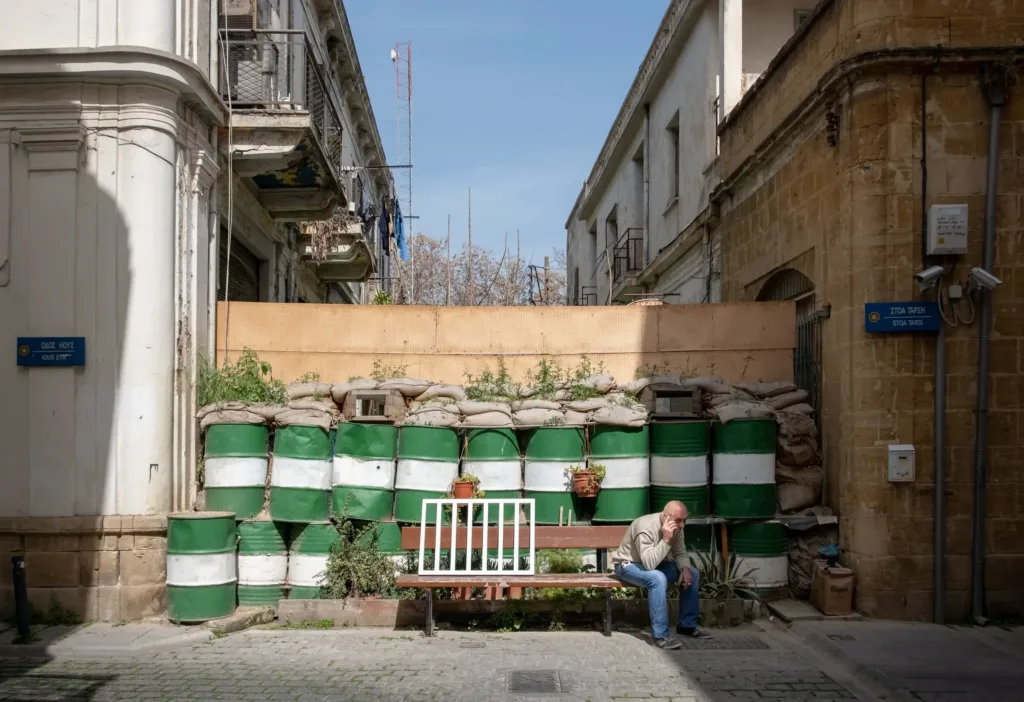
Northern Cyprus (North Cyprus): Legal Entry, Crossing the Line, Towns and Weather
About the place
Checked: 12 November 2026.
Northern Cyprus: a brief overview
Northern Cyprus, or North Cyprus, is the term generally used to refer to the northern part of the island, where the Government of the Republic of Cyprus does not exercise effective control. According to the Cyprus Ministry of Foreign Affairs, following the Turkish invasion of 1974, more than 36 per cent of the Republic’s territory remains under occupation by the Turkish army.
In 1983, the so-called ‘Turkish Republic of Northern Cyprus’ was proclaimed in this territory. In Resolution 541 the UN Security Council declared this proclamation legally invalid, and, as the Court of Justice of the European Union notes, this entity is not recognised by anyone other than Turkey.
For travellers, this means that, according to the Republic of Cyprus’s position, the only legal way to enter the north is to enter Cyprus through the legal points of entry in the south and cross the dividing line at an official crossing point. Below is information on the positions of the UN, the EU and the Republic of Cyprus regarding the status of the area, the routes in via the south or via Turkey, the towns and sights of the north, the weather by month and what to check before travelling.
Status: the position of the UN, the EU and the Republic of Cyprus
Security Council Resolution 541 of 18 November 1983 declared the proclamation of the ‘TRNC’ as legally invalid, called for its withdrawal and called upon all States not to recognise any Cypriot state other than the Republic of Cyprus. Resolution 550 of 11 May 1984 condemned further secessionist actions and reiterated the call not to recognise this entity or to assist it.
Cyprus joined the European Union in 2004 as a whole island, but, according to the European Commission, the application of EU law in the north is suspended: the government of the Republic does not exercise effective control there. The dividing line is not an external border of the EU, and crossing it is governed by a separate Council Regulation (EC) No 866/2004.
The Cyprus Ministry of Foreign Affairs describes the northern part of the island as occupied by the Turkish army and the Government of the Republic as the sole legal and internationally recognised government on the island. UN Security Council resolutions put the name in quotation marks and speak of a ‘purported State’; the Republic of Cyprus refers to the so-called ‘TRNC’, while the European Commission generally avoids the name and speaks of the areas where the Government of the Republic does not exercise effective control.
How to get to the north legally
According to the Cyprus Ministry of Foreign Affairs, the legal points of entry into the Republic of Cyprus are the international airports of Larnaca and Paphos and the ports of Larnaca, Limassol, Latsi and Paphos. The Ministry considers entry via any other port or airport in areas not under government control to be illegal: those arriving in this way, it states, are in breach of the laws of the Republic of Cyprus.
Direct flights and ferries to the north are therefore a risky option for those who wish to visit the south later on. The Spanish Embassy in Nicosia also warns that the authorities of the Republic do not permit entry through Tymbou (Ercan) airport or by sea to the north, and that people who entered this way and try to cross to the south risk being refused at the crossing point and fined.
Crossing from south to north is possible only at the official crossing points. In Nicosia the Customs Department of the Republic of Cyprus lists Ledra Palace and Ledra Street (pedestrians only) and Agios Dometios; the other crossing points are Astromeritis–Zodhia, Kato Pyrgos–Karavostasi, Lefka–Apliki and Deryneia, while Pergamos and Strovilia lie in the British Dhekelia base.
Arriving from outside the EU: via the Republic or via Turkey
Many travellers reach the north by flying via Turkey to Tymbou (Ercan) airport or by ferry from Turkish ports, while others fly to Larnaca or Paphos in the south and cross the line. The two routes differ not only in price and journey time but also in their consequences under the law of the Republic of Cyprus. From Russia there are no direct flights to Cyprus at all: since 2022 EU airspace has been closed to Russian airlines, so every route involves a connection.
The legal route is entry through Larnaca or Paphos airport. Citizens of countries that need a visa to enter the EU — Russia, for example, is listed in Annex I to Regulation (EU) 2018/1806 — need a Republic of Cyprus visa, which our Cyprus visa guide explains. Having entered this way, you can cross to the north and back: the Green Line Regulation allows third-country nationals to cross with a valid travel document and, where required, a valid visa for the Republic of Cyprus. The UK Foreign Office warns that the Republic’s authorities count time spent in the north towards the 90-day visa-free total, so plan your trip within the period you are allowed to stay.
The Republic of Cyprus does not regard the route via Turkey as legal. According to its Ministry of Foreign Affairs, people who arrive through an airport or port in the north are in breach of its legislation, and the UK Foreign Office lists the consequences: a fine for illegal entry, refusal of entry to or exit from the Republic of Cyprus, and being prevented from crossing back into the north. If you fly into Tymbou (Ercan), expect that an attempt to cross to the south — to Nicosia, Larnaca or Limassol — may end in refusal at the crossing point and a fine, and that you will have to leave the island the same way, via Turkey.
The same applies at sea. The Spanish Embassy in Nicosia warns that if a private vessel calls at a port in the north and then sails to a port in the south, the legislation of the Republic provides for heavy fines and the seizure of the vessel.
Documents, car and insurance
Documents are checked at the crossing point. The rules for different categories of travellers, the procedures for EU citizens and non-EU nationals, and restrictions on the import of goods are explained in detail in our article on crossing the Green Line – check it and the Customs website before you go.
Cars are a separate issue. The UK Foreign Office (FCDO) warns that hire cars from the south are often not insured in the north and that you will not be allowed through a crossing point without the correct insurance documents. Insurance for the north can be bought at some crossing points, including Agios Dometios.
The Spanish Embassy in Nicosia adds that different insurance policies are required in the south and the north, and that the car hire company may even prohibit travel to the north. Therefore, before you travel, read the hire agreement and check with the hire company whether crossing the line is permitted and what will happen if the car breaks down or is involved in an accident north of the line.
Money, phones and the return to the south
Payments in the north are made in Turkish lira. In a report on the Turkish Cypriot economy, the World Bank links the high cost of living there to the depreciation of the lira and high inflation, so prices in lira change quickly. Before paying, check which currency the bill is in.
Mobile coverage in the north is provided by local operators that are not part of the Republic of Cyprus networks, so your provider’s roaming charges there may differ from those in the south — check them in advance. Near the line your phone may switch to a northern network on its own; in such places Cyta advises selecting the network manually and checking its name.
When returning to the south, goods purchased in the north are subject to customs checks by the Republic. Customs sets a duty-free allowance and specific limits for cigarettes and spirits, which do not apply to persons under the age of 17, and fine-cut and other smoking tobacco from the north may not be brought in.
The Spanish Embassy reports cases in the north where international bank cards were charged much more than the amount on the bill, and the chances of getting the money back were very slim. Before paying by card, check the currency and the amount, keep your receipts and keep an eye on your statement.
The police on both sides may confiscate goods, and, according to the Spanish Embassy, the opening hours of crossing points sometimes change without notice. Allow plenty of time for the way back and do not carry anything across the line if you are unsure of the rules.
Towns and sights of the north
Nicosia is divided by the line. From Ledra Street you can cross on foot into the northern part of the old town, to the Cathedral of Saint Sophia, today the Selimiye Mosque. Our guide to Nicosia covers the rest of the capital.
Kyrenia on the north coast has a harbour and a castle whose museum houses the Kyrenia ship. On the slopes of the Pentadaktylos range above the town stands the Gothic Bellapais Abbey, and on the range itself Saint Hilarion Castle.
Famagusta in the east has an old town within Venetian walls, with Othello’s Tower and the former Cathedral of Saint Nicholas. Nearby lie the fenced-off quarter of Varosha, whose status we cover separately, and, north of the town, the ruins of ancient Salamis.
In the west lies Morphou, an area of citrus groves, and on the coast to its west the ruins of the ancient city of Soli and of the fifth-century BC palace of Vouni. The Karpasia peninsula stretches to the north-east; near Cape Apostolos Andreas at its tip stands the Monastery of Apostolos Andreas. There are long sandy beaches on Karpasia and east of Kyrenia; sea turtles nest on some of them in summer, so keep away from the nests and do not leave litter.
Place names here follow the standard of the Republic of Cyprus. Road signs in the north use other names, so check against a map — for example our map of Cyprus with its districts and the dividing line.
Weather by month
The Cyprus Department of Meteorology runs its stations in the south, so the guide for the north is its 1991–2020 climate normals submitted to the World Meteorological Organization: Nicosia (Athalassa station) for the interior and Larnaca airport for the coast. On the coast summers are less hot than inland, and winter nights are milder.
| Month | Nicosia: day / night, °C | Coast (Larnaca): day / night, °C |
|---|---|---|
| January | 16 / 6 | 17 / 8 |
| February | 17 / 6 | 18 / 8 |
| March | 20 / 8 | 20 / 9 |
| April | 25 / 11 | 23 / 12 |
| May | 30 / 15 | 27 / 16 |
| June | 34 / 20 | 31 / 20 |
| July | 38 / 23 | 33 / 23 |
| August | 37 / 23 | 33 / 23 |
| September | 34 / 19 | 31 / 21 |
| October | 29 / 16 | 28 / 18 |
| November | 23 / 11 | 23 / 13 |
| December | 18 / 7 | 19 / 10 |
Average daily maximums and nightly minimums are rounded to the nearest degree. The swimming season runs from June to November: according to the Cyprus Deputy Ministry of Tourism, the open sea is warmer than 22 °C in these months and reaches 27 °C in August, while near the coast, at a depth of three to four metres, the water ranges from 15–17 °C in February to 23–28 °C in August.
July and August are the hottest months, and most of the rain falls between November and March. For towns and monuments, April, May, October and November are more comfortable: the days are warm but not hot.
Housing and property: legal risks
The Cyprus Ministry of Foreign Affairs warns that staying in houses and hotels in the north that belong to forcibly displaced Greek Cypriots, or were built on their land, may lead to legal action by the owners. Under the laws of the Republic, the use of property registered in another person’s name may constitute a criminal offence.
This risk has been confirmed by court rulings. In 1996, in Loizidou v. Turkey, the European Court of Human Rights held that denying the owner access to her land in Kyrenia since 1974 violated her right to property. In 2009 the Court of Justice of the European Union ruled in Apostolides v Orams that a judgment of a court of the Republic ordering land in the north to be vacated must be recognised and enforced in other EU countries.
In that case, a British couple bought a plot of land in the north from a third party and built a house on it, whilst a court in Nicosia recognised a displaced Greek Cypriot as the rightful owner. Buying or renting property in the north is a decision with serious legal implications, which should not be taken without legal advice.
The Criminal Code of the Republic of Cyprus applies to the whole island, including the north. As the Embassy of Greece in Nicosia explains, under Article 303A dealing in property belonging to another person with intent to defraud is a felony punishable by up to seven years’ imprisonment, and an attempt by up to five. The article covers not only the seller but also anyone who advertises such a deal, concludes an agreement or accepts the property for purchase, rent or use, and a European Arrest Warrant may be issued in such a case.
The Republic of Cyprus does not recognise residence permits issued in the north, as the UK Foreign Office warns. A home bought in the north therefore does not open a route to living lawfully in the south of the island.
Safety and on-site assistance
According to the Cyprus Ministry of Foreign Affairs, the Government of the Republic cannot guarantee the safety of visitors in the north or provide consular assistance there. The UK Foreign Office also warns that its High Commission’s ability to provide assistance in the north is limited; therefore, please check the advice issued by your embassy before travelling.
Do not take photographs of military installations, checkpoints or fortified areas: the UK Foreign Office warns that you could be arrested. Do not enter the UN buffer zone outside the civil use areas without authorisation from the peacekeepers, even if a road appears to run through it on the map.
Before you set off, check four things: the documents for crossing the line, car insurance valid for the north, authorisation from the car hire company, and accommodation that is not linked to the property of displaced owners. Separate guides to the towns and sights of the north — Kyrenia, Famagusta and Bellapais — will help you plan your itinerary.
Continue planning
- Cyprus Green Line: crossings and travel to the north
- Visa for Cyprus and entry rules
- How long is the flight to Cyprus
- Kyrenia: the harbour, the old town and planning a visit
- Kyrenia Castle and the Kyrenia ship
- Famagusta (Ammochostos): Old Town, Walls and Monuments
- Map of Cyprus: districts, towns, villages and the Green Line
Official sources
- Cyprus Ministry of Foreign Affairs: important information on travel to the Turkish-occupied area of Cyprus
- Permanent Mission of Cyprus to the UN: Security Council Resolution 541 (1983)
- United Nations: Security Council Resolution 550 (1984)
- European Commission: the Green Line Regulation
- EUR-Lex: Council Regulation (EC) No 866/2004 on the Green Line, Article 2
- EUR-Lex: Regulation (EU) 2018/1806 — countries whose nationals need a visa
- EUR-Lex: Council Regulation (EU) 2022/334 — EU airspace closed to Russian air carriers
- Customs Department of the Republic of Cyprus: crossing points
- UK Foreign Office (FCDO): entry requirements for Cyprus and the north
- UK Foreign Office (FCDO): travel to the north of Cyprus
- UK Foreign Office (FCDO): Cyprus travel advice, safety and security
- Embassy of Spain in Nicosia: crossing the line and staying in the north
- Embassy of Greece in Nicosia: legal consequences of transactions in Greek Cypriot property in the north
- European Court of Human Rights: Loizidou v. Turkey (1996)
- Court of Justice of the EU: judgment in Case C-420/07, Apostolides v Orams
- WMO: 1991–2020 climate normals for Cyprus Department of Meteorology stations (NOAA NCEI archive)
- Cyprus Deputy Ministry of Tourism: climate and weather
- World Bank: report on the Turkish Cypriot economy (2024)
- Cyta: roaming tips
UN buffer zone barricade near the Ledra Street crossing point in Nicosia · Photo: Jules Verne Times Two · CC BY-SA 4.0 · converted to WebP and resized.
